Rådets flyvesikkerhedspris
Rådet for større Flyvesikkerhed indstiftede i 1971 en flyvesikkerhedspris.
Prisen gives til personer, foreninger eller institutioner, som har gjort en særlig indsats for at højne flyvesikkerheden i Danmark.
Flyvesikkerhedsprisen har være uddelt mere end 10 gange og blev sidst uddelt i 2025.
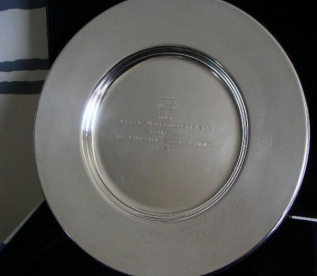
Prismodtagerens navn indgraveres i sølvfadet og må opbevares indtil prisen igen uddeles.
Flyvesikkerhedsprisen tildeles efter indstilling og alle kan sende en indstilling til Rådet, der vurderer indstillingerne og udpeger evt. prismodtagere.
RÅDETS VISION
Rådets bestyrelse og Rådet har arbejdet med at formulere Rådets Vision
Nyt / Genveje
Div. aktiviteter 2026
21. marts 2026 – AOPA/DMU sikkerhedsdag, Roskilde
25. april 2026 – AOPA/DMU sikkerhedsdag, Aarhus => Aflyst!
18. november 2026 – Luftfartskonference på Christiansborg
Rådsmøder 2026
19. januar 2026, klokken 1600, Rådsmøde 307 i Naviair
13. april 2026, klokken 1600, Generalforsamling & Rådsmøde
17. august 2026, klokken 1600, Rådsmøde 309 i Naviair
16. november 2026, klokken 1600, Rådsmøde 310 i Naviair
Rådsmøder 2027
18. januar 2027, klokken 1600, Rådsmøde 311 i Naviair
12. april 2027, klokken 1600, Generalforsamling i Naviair
16. august 2027, klokken 1600, Rådsmøde 313 i Naviair
22. november 2027, klokken 1600, Rådsmøde 314 i Naviair
Div. øvrige arrangementer
21. august 2026, Samsø Fly-in
13. september 2026, Danish Airshow FSN Aalborg
18. november 2026, Luftfartskonference Christiansborg
21-22. august 2027, Roskilde Airshow
Naviair har udsendt en information til VFR piloter med henblik på at give GA piloter information og vejledning om flyvning i dansk luftrum. Informationen er udsendt både på dansk og engelsk og indeholder en mængde generelle gode råd, men også nogle råd, der har fokus på at undgå uautoriseret indtrængen i luftrum. http://www.naviair.dk/øvrige-publikationer.1741.aspx http://www.naviair.dk/publications.663.aspx
Basic Aircraft Control
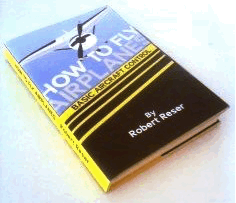 “How to Fly Airplanes” is the first complete review of aircraft control in almost fifty years. There are many considerations of flight control not found in current texts. Even the accomplished professional pilot and flight instructor will find in this book there are different ways to consider how flight control is accomplished. 1. Flight. The forces of lift; The wings, horizontal stabilizer, rudder and thrust-component. 2. How airplanes stall; Only with Pilot input holding aft elevator to exceed critical angle of attack. The pilot stalls the aircraft…every time. 3. Directed Course flight; Maneuvering visually by collision course toward points on the horizon or ground. 4. Engine thrust-component lift and gravity-component thrust; Component forces aiding flight and attitude control. 5. Indicated-airspeed control; Use of elevator position and engine thrust-component lifting to set angle of attack. 6. Flight controls and engine thrust-component lift; Direct the thrust for attitude control. 7. Level, constant indicated-airspeed turn. Requires power coordination and no elevator input. 8. Engine Thrust; Consider the thrust available. Learn what that is in a small aircraft. 9. Approach and landing; The rudder steers and power controls descent. Learn to use the feet for steering from short final to touchdown to parking.
By the author, Rober Reser: “I cannot find a book that correctly explains all the basics of aircraft control. I need to write it down…How to Fly an Airplane!”
Yderligere fra forfatteren